Friday, June 25, 2010

Jules And The Polar Bears - Got No Breeding

For somebody who loves pure powerpop there's no finer example what it is that fuels the passion than this little gem. A classic case of wrong place/wrong time ended up burying it, but over the years it dragged itself from the grave and got recognized for the perfection it is.

amg:

Jules and the Polar Bears' debut album, Got No Breeding, fell into a commercial twilight zone shortly after its release in 1978; the music was too quirky and the wit of the lyrics was too curious for the mainstream rock audience, but the band's approach was too firmly rooted in mainstream pop for the new wave crowd, who Columbia thought would be the record's likely target audience (and the shaggy picture of Jules Shear and his bandmates on the cover wasn't likely to encourage the skinny-tie wearing record buyer). However, in time Got No Breeding became a cult favorite, and with good reason — it's a superlative collection of smart, well-crafted pop tunes played with enthusiasm and élan by a great band. The studio-savvy guitar work of Richard Bredice and Stephen Hague's piano have one foot in mainstream rock & roll, but the slightly strangled cry of Shear's vocals takes these songs into another place, though he's able to keep up with the band when they shift into high gear on tunes like "Convict" and "Driftwood from Disaster," and he generates some genuine soul on "You Just Don't Wanna Know" and the title cut. Shear's songs also take a skewed but heartfelt look at life and love in the Modern Age, and there isn't a less than memorable tune in the bunch; close to thirty years on, Got No Breeding's fusion of polished studio craft and idiosyncratic pop experimentation sounds prescient rather than eccentric. Got No Breeding is where Jules Shear's career as a cult hero really took off, and with good reason — it's a thoroughly enjoyable album and one of the finest records his name has ever been attached to.

Hear

Friday, June 18, 2010

Audio Sports - Strange Fruits

Smoother, slicker than Baywatch's preceding post of Era. Bigger jazz influences. It still gasses.

I actually prefer this one, but just by a little bitty bit.

Hear

Thursday, June 17, 2010

Audio Sports - Era of Glittering Gas, Eat+Buy+Eat (1992)


!!!REBOOT!!!
this is not really a new post, but a repost.


see I

was hanging with my pal The Hen t'other night

in my kitchen, when he requested, as he always does

to hear Audio Sports. I've come to realize that it is the only

record in my collection he does not possess but wishes he did...


and so we listened to it and it sounded as fine as ever

but then today when i wanted to hear it at work

i tried pulling it offa the froxx here, alas

only to find my link was crossed

with a Sonny Sharrock boot

well, hah and lol

sorry!

it's been fixed

now

i urge you

to check this out

if you have not yet

+++

the beats are smoof

and eye's rhymes flow

in a most pleasant mode


Trouser Press: For fans of space-a-delic rap, Audio Sports resembles nothing so much as the Beastie Boys being choreographed by a tag team of Neil Tennant and John Zorn. With its surreal cutting (provided by DJ Kool Jazz Takemura) and stun-gun BPM levels, Eat+Buy+Eat uses basic hip-hop elements as a base for wiggy gibbers and rasps that effectively skewer consumer culture icons. Yamatsuka is less of a presence on Era of Glittering Gas, but his hijinks add an edgy goofiness to the maliciously playful "Outlaw in Wonderland."


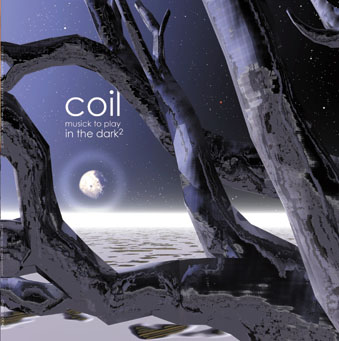
COIL - Musick to Play in the Dark (1999-2000)


formed in 1982
by John Balance and his partner
Peter Christopherson, aka "Sleazy".
The duo worked together on a series of releases before Balance chose the name Coil,
which he claimed to be inspired by the omnipresence of the coil's shape in nature.
Today, Coil remains one of the most influential and best known industrial music groups.
Although Coil expressed interest in many musical groups,
they rarely, if ever, claimed to be influenced by them.
Coil explicitly stated the influence of such non-musical sources as
Furthermore, the group were friends with Burroughs and owned some of Spare's original artwork.
Coil's worked in such genres as
creating what Balance explicitly referred to as
"magickal music".
Balance described the early Coil work as "solar"
and the later work as "moon musick".
~~~
is one of two albums attributed purely to a style called "moon musick",
which signified their change from a "solar" to a "moon" group.

Wednesday, June 16, 2010

Steely Dan - Can't Buy A Thrill (1972)


I don't know what it is,

but I've been fiending

for all kinds of Steely of late.


We've got the AJA pinnacle up,

so why not this here Debut?


lyrically idiosyncratic

melodically shimmering

dark and druggie

unrepentant hippie-haters


Steely Dan

blah blah blah


The ultimate punks?


allmusic: Walter Becker and Donald Fagen were remarkable craftsmen from the start, as Steely Dan's debut, Can't Buy a Thrill, illustrates. Each song is tightly constructed, with interlocking chords and gracefully interwoven melodies, buoyed by clever, cryptic lyrics. All of these are hallmarks of Steely Dan's signature sound, but what is most remarkable about the record is the way it differs from their later albums. Of course, one of the most notable differences is the presence of vocalist David Palmer, a professional blue-eyed soul vocalist who oversings the handful of tracks where he takes the lead. Palmer's very presence signals the one major flaw with the album — in an attempt to appeal to a wide audience, Becker and Fagen tempered their wildest impulses with mainstream pop techniques. Consequently, there are very few of the jazz flourishes that came to distinguish their albums — the breakthrough single, "Do It Again," does work an impressively tight Latin jazz beat, and "Reelin' in the Years" has jazzy guitar solos and harmonies — and the production is overly polished, conforming to all the conventions of early-'70s radio. Of course, that gives these decidedly twisted songs a subversive edge, but compositionally, these aren't as innovative as their later work. Even so, the best moments ("Dirty Work," "Kings," "Midnight Cruiser," "Turn That Heartbeat Over Again") are wonderful pop songs that subvert traditional conventions and more than foreshadow the paths Steely Dan would later take.


Personally

my real favorite here is


[removed per DMCA complaint march 7, 2011]


Monday, June 14, 2010

U Roy - Natty Rebel


If reggae music was an energy bar this would be a Powerbar.

You can almost smell the dude on the cover.

_______________


Allmusic.com: Still recording with producer Tony Robinson, with whom U-Roy cut 1975's Dread Inna Babylon album, for the follow-up Natty Rebel, the DJ enlisted the services of bassist/backing vocalist Lloyd Parks, drummer Sly Dunbar, and singers Barrington Spence and Flip Wilson. As one would expect, Parks and Dunbar filled the album with deep, rootsy rhythms, with the latter clicking away like a human metronome on "Badie Boo." Robinson was particularly adept at turning rocksteady classics on their head; his studio trick of fading the vocals out in a stutter of reverb gave these oldies a fresh, dubby feel that was further accented by the rhythm section. But around these rootsy beats and style, U-Roy created a kaleidoscope of moods and styles with the help of a heap of backing tracks. Compared to the more radicalized Dread, Rebel has a jauntier, easygoing air that permeates virtually the whole disc. It's particularly noticeable on "Do You Remember," where the DJ launches into the track, and chatters along non-stop, as light and breezy as a spring day. Yet, U- Roy has total control of the rhythms, never misplacing a single syllable, whilst sounding so relaxed as to make you believe he recorded this impromptu in one take. The album's most talked about song was inevitably the title track, a version of the Wailers' "Soul Rebel." In truth, though, the original is so powerful that U-Roy does little more than echo the lyrics. Perhaps Robinson should have stripped off the vocals and given the DJ more room to maneuver. The highpoint, then, belongs to the exuberant "Babylon Burning," a song loosely based on "Proud Mary," which in a burst of inspiration the DJ resurrected in a Rastafarian mode and gained another deserved hit single.
HEAR

Various Artists - Survival Sampler SR-1A (1984)

"Warner Bros. Records' Survival Sampler SR-1A is a portable compendium of the best of British and Australian new music. The complete version, commercially available only on cassette, is 56 minutes in length and features twelve artists from eight different labels. Designed to enhance and perhaps extend human life, the Survival Sampler comes in a can."


this came our way via one BobAvocado:

Guys of ForestRoxx,

I thought you night be interested in an almost all digital source copy of the 1984 Warner Music Survival Sampler SR-1A Sound Rations - I get the sense from your blog that you are approximately my age and might recall this sampler that came in a cold war appropriate army drab can.

I cobbled this together from my CD's except for The Assembly song which seems never to have been released in North America digitally - so its an audio rip from a You Tube video. I do have a vinyl version of the song on a 6 track radio station promotional EP for said sampler (no ability to rip from the vinyl at the moment).

Regards,
BobAvocado


Track List:
01. The Smiths - What Difference Does It Make
02. The Church - Electric Lash
03. China Crisis - Wishful Thinking
04. Scritti Politti - Wood Beez (Pray Like Aretha Franklin)
05. Carmel - More More More
06. King Crimson - Sleepless
07. Aztec Camera - Pillar To Post
08. The Cure - The Caterpillar
09. The Bluebells - I'm Falling
10. Modern English - Rainbows End
11. The Assembly - Never Never
12. Depeche Mode - Everything Counts


HEAR

(password: survival)
[link removed per DMCA complaint 10/10/10]
eXTReMe Tracker